
Laser micro-cutting
Ablation, cutting of tubular parts in stainless steel, steel or Nitinol
Since 1945, the removal and the laser micro-cutting precision instruments are among the activities from STEEC in Brindas, near Lyon.
Steec: a range of laser skills
We offer a range of laser services thanks to a machine specialized in the production of micro-cutting on tubular parts as well as ablation using a femtosecond laser source.
Using this innovative and high-performance machine, the production of your very high precision parts on tubular blanks whose diameter can vary from 10mm to 0.2mm is possible with the laser cutting process.
We can machine your parts using micro-laser cutting, whether they are made of Nitinol, ferrous or non-ferrous alloys, as well as polymer materials.
With a machine with a USP (ultra – short -pulsed) source, also called a femtosecond source, your specific needs such as ablation operations with a precision of the order of a few microns can be carried out.
Our commitment to quality and our certifications
Two applications of this technology are featured on a dedicated page: the design of’tensile test tubes and the cutting of retention wire for orthodontics.
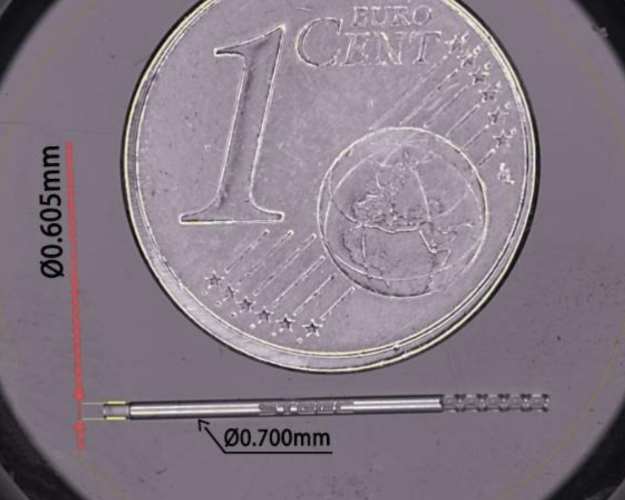

high precision complex geometries
The use of this machine also allows the production of complex geometries with very high precision.
Branches that can go down to around a few µm thick with diameters less than a millimeter.
In the figure on the right taken in x240 the hexagonal-shaped stent has 20 µm branches on a 0.7 mm diameter stainless steel tube.
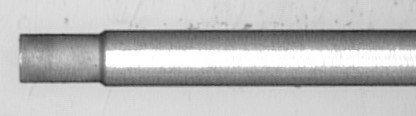
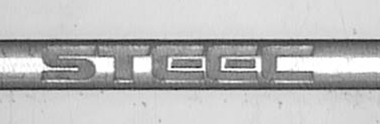
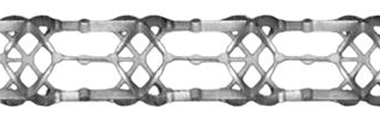
Medical stents
STEEC designs and manufactures custom-made medical stents using laser micro-cutting tubes. Manufacturing takes place in France, at our Brindas facility, according to ISO 13485 certified processes. Each project benefits from technical support, from prototype to series production.

FAQ - Frequently Asked Questions
How does laser micro-cutting work on tubular parts?
Micro laser cutting of tubes uses a high-precision laser beam guided by CNC (Computer Numerical Control). The tubular workpiece is rotated on an axis, while the laser follows the programmed path to cut the desired geometries. This multi-axis control makes it possible to produce complex shapes impossible to achieve with conventional machining. Material residues are removed by ablation, without physical contact between the tool and the workpiece.
What materials can be micro-cut with laser at STEEC?
Our laser micro-cutting machine processes a wide range of metallic and non-metallic materials. For metals, we work with stainless steels, titanium, Nitinol, ferrous and non-ferrous alloys, and brass. Biocompatible metal parts used in the medical field, such as Nitinol for stents, are among our standard products. We also work with engineering polymers for specific projects. The diameter of the machined tubes can range from 0.2 mm to 10 mm.
What level of precision does STEEC's laser micro-cutting achieve?
Laser micro-cutting achieves precision on the order of a few microns. Our machines can produce branches 20 µm thick on tubes 0.7 mm in diameter. These performance levels are verifiable: we have produced hexagonal stents observed at 240x magnification with perfectly reproducible geometry. This extreme precision is the result of complete mastery of laser parameters, axes, and CNC programming.
What is the difference between laser micro-cutting and femtosecond ablation?
Laser micro-cutting slices through material to produce shapes and contours within a tube. Laser ablation, performed with an ultra-short pulsed (USP) femtosecond source, removes material layer by layer at an even finer scale. The femtosecond source minimizes the heat-affected zone, which is critical for heat-sensitive materials such as Nitinol or titanium. STEEC has both technologies available at its machine park in Brindas.
Is laser micro-cutting suitable for individual parts and prototypes?
Yes, that's one of its major advantages in subcontracting. CNC programming allows you to go from a single part to medium or large series without changing tooling.
The production of prototype parts and then series production is integrated into our process from the outset. We support our clients from the development phase to the manufacturing of parts in volume, with the same high quality standards at every stage.
In which industrial sectors do you use laser micro-cutting?
Industries that rely on laser micro-cutting are those requiring extremely tight tolerances. Medical devices are our primary focus: vascular stents, support wires, and surgical micro-instruments. Aerospace is our second major area of expertise: we supply major manufacturers such as Airbus and Thales. Scientific research, through the CNRS and the CEA, is also a regular partner for machining experimental parts in titanium, special steels, and exotic alloys.
Visit our dedicated page for our areas of intervention.
Can laser micro-cutting replace electro-erosion or grinding?
These are complementary, not interchangeable, processes. Grinding is used for large flat surfaces and dimensional adjustments.’electroerosion Wire cutting is better suited to closed internal shapes on solid parts. Micro-laser cutting is essential for tubular parts, complex geometries on very small diameters, and non-conductive materials. STEEC has mastered these different processes and guides each project toward the technology best suited to your specifications.
A micro laser cutting project?
Your complex parts can also be manufactured by us using laser micromachining operations on flat parts, or drilling operations, etc.precision machining, micro-milling, turning or wire electro-erosion in Brindas.
Tubular parts made by micro-cutting or laser ablation are used in sectors with extreme requirements such as aerospace or medical.